Tracking Ancestors on the Underground Railroad. II: Queen’s Bush
“This name (Queen’s Bush) was originally given to a large, unsurveyed tract of land, now comprising the townships of Peel and Wellesley, and the country extending thence to Lake Huron. While it was yet a wilderness, it was settled mainly by colored people, about the year 1846.”
Drew 1856, 189
MECHANICSVILLE, Va. (DML) — African American emigration to Canada increased after Britain’s Slavery Abolition Act of 1833 went into effect in Canada on Aug. 1, 1834—a day now commemorated as Emancipation Day in Canada—thereby establishing a safe haven for escaped slaves and free blacks from south of the Canadian border. The passage in the United States of the Fugitive Slave Law in 1850 further inspired emigration. As they arrived, these escaped slaves and free blacks established a number of communities across southern Ontario. Among those communities was one referred to as Queen’s Bush.
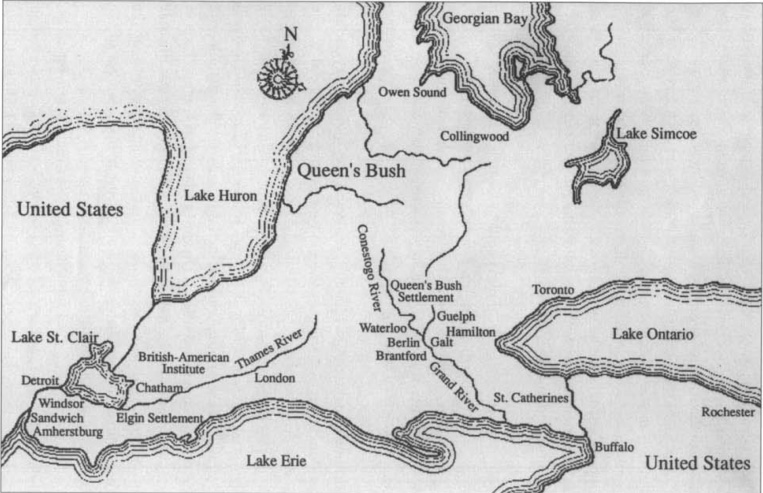
Early in the nineteenth century, Queen’s Bush was largely a wilderness stretching from what is now Peel and Wellesley Townships (northwest of Waterloo and Guelph) in southern Ontario westward to Lake Huron. Much of the land was owned by the Crown (Queen Victoria of England) and set aside as clergy reserve, i.e., land held in reserve for the support of Church of England clergy. But as more settlers moved to Canada and needed land, plans changed. Some of the land would be sold—but only after it was surveyed, and it was taking decades to get the land surveyed.
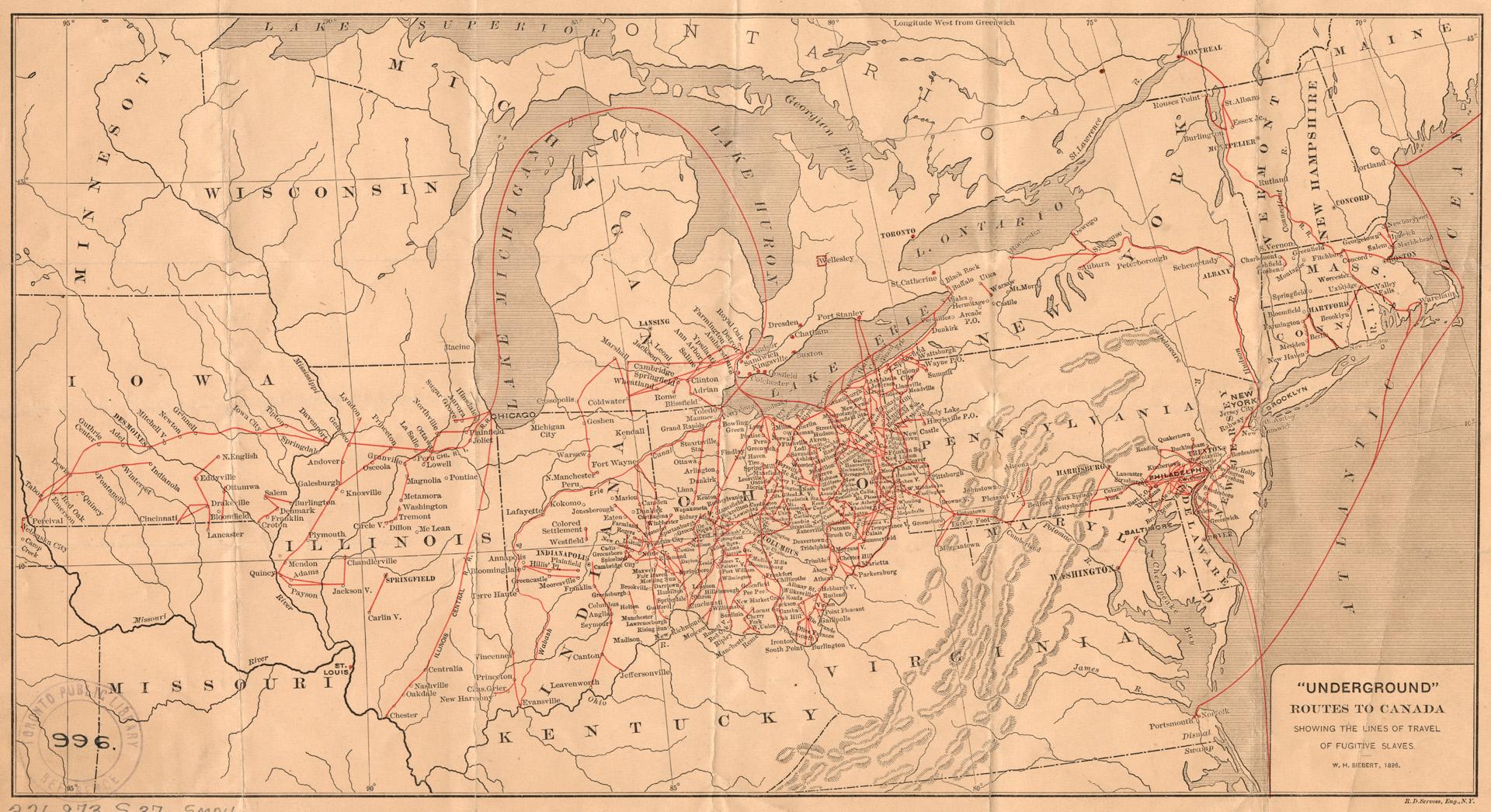
Because the land was not-yet surveyed and, as a result, could not be purchased when they initially settled there, many settlers squatted on the land and began clearing it for farms in the hopes that they would eventually be able to buy the land after the required surveys had been carried out. They greatly improved the land’s value through their efforts (Siebert 1898).
Peel Township, in Wellington County, Western Canada (now Ontario), was part of that unsurveyed region when African Americans (both escaped slaves and free blacks) established the Queen’s Bush settlement there (Pavlakos 2021). They found much hardship, but with the potential for creating their own paradise where they and their families could be free.
“The fact that there were large tracts of good land in the portion of Canada accessible to the fugitive was a fortunate circumstance, for the desire to possess and cultivate their own land was wide-spread among the escaped slaves. This eagerness drew many of them into the Canadian wilderness, there to cut out little farms for themselves, and live the life of pioneers. The extensive tract known as the Queen’s Bush, lying southwest of Toronto and stretching away to Lake Huron, was early penetrated by refugees.”
Siebert 1898, 204
More and more slaves and free blacks began moving into the area in the 1840s.
“By 1846 the more distant interior was invaded. In that year the long strip of country stretching from the western extremity of Lake Ontario across to Lake Huron, and designated on the general map as Queen’s Bush, was entered by pioneers who had escaped from slavery. This region was not surveyed until about 1848, and by that time there were as many as fifty families located there. Some time during the years 1845 to 1847, the Rev. R. S. W. Sorrick went as far north as Oro, where he found ‘some fifty persons settled, many comfortable and doing well, but many [suffering] a great deal from poverty.’ ”
Siebert 1898, 218
“My father and myself went to the Queen’s Bush in 1846. We went four and a half miles beyond the other farms, to Canestogo, where he cleared up and had a farm; for years scarcely any white people came in, but fugitive slaves came in, in great numbers, and cleared the land. Before it was surveyed, there were as many as fifty families. … Some colored people have come in from the free States, on account of the fugitive slave bill, and bought land.”
William Jackson of Queen’s Bush, as quoted in Drew 1856, 189-190
John Little was a legend among the escaped slaves in the Queen’s Bush settlement. He escaped several times from his owners. He paid dearly for each attempt, but he never gave up. After his wife was sold away from him, he escaped again, reunited with his wife, Eliza, and they made a harrowing trek north to Canada. At one point, he missed getting caught by a slave patrol by mere yards. They found freedom in Canada, but no paradise.
“. . . We heard of the Queen’s Bush, where any people might go and settle, colored or poor, and might have a reasonable chance to pay for the land. We set out to find the Queen’s Bush—went to Buffalo—thence to Black Rock—thence to St. Catharines, and there I got straight instructions. We had not a second suit of clothes apiece; we had one bedquilt and one blanket, and eighteen dollars in money. I bought two axes in Hamilton, one for myself, and one for my wife; half a dozen plates, knives and forks, an iron pot, and a Dutch oven: that’s all for tools and furniture. For provisions I bought fifty weight of flour, and twenty pounds of pork. Then we marched right into the wilderness, where there were thousands of acres of woods which the chain had never run round since Adam. At night we made a fire, and cut down a tree, and put up some slats like a wigwam. This was in February, when the snow was two feet deep. It was about fourteen years ago. We made our bed of cedar boughs from a swamp. Thus we travelled three or four days, seeing plenty of deer: wolves, as plenty as sheep are now, were howling about us, and bears were numerous.”
John Little of Queen’s Bush, as quoted in Drew 1856, 216
As hard as it was, John Little put his defiance to good use.
“As it is so often said by slaveholders, that if the ‘niggers’ were free, and put in a place where they would be together they would starve to death, I wanted to show to the contrary. I have one hundred and fifty acres of land: one hundred and ten of it cleared, and under good cultivation: two span of horses, a yoke of oxen, ten milch cows and young cattle, twenty head of hogs, forty head of sheep; I have two wagons, two ploughs, and two drags. . . .”
John Little of Queen’s Bush, as quoted in Drew 1856, 218
Little’s target audience wasn’t just the whites who assumed African Americans were inferior, it was also free blacks who worked in subservient roles elsewhere:
“I would like to show it to those stout, able men, who, while they might be independent here, remain in the towns as waiters, blacking boots, cleaning houses, and driving coaches for men, who scarcely allow them enough for a living. To them I say, go into the backwoods of Queen Victoria’s dominions, and you can secure an independent support. I am the man who has proved it; never man came into an unsettled country with lesser means to begin with. . . . Some say, you cannot live in the woods without a year’s provisions,—but this is not so: I have come here and proved to the contrary. I have hired myself out two days to get things to work on at home one. If there is a man in the free States who says the colored people cannot take care of themselves, I want him to come here and see John Little.”
John Little of Queen’s Bush, as quoted in Drew 1856, 218-219
The escaped slaves and free blacks to entered the wilderness of the Queen’s Bush and began to clear it greatly increased the land’s value. They made the land livable and profitable, but in the end far too many paid dearly for their efforts.
References
Brown-Kubisch, Linda. 2004. The Queen’s Bush Settlement: Black Pioneers 1839-1865. Toronto: Natural Heritage Books.
Drew, Benjamin. 1856. The Refugee: Or the Narratives of Fugitive Slaves in Canada. Boston: John P. Jewett.
Pavlakos, Raphaela. 2021. “The Forgotten History of Wellington County: Queen’s Bush Settlers and their Legacies.” The Black Past in Guelph: Remembered and Reclaimed (blog), University of Guelph. 27 Nov 2022. https://blackpastinguelph.com/2021/02/15/the-forgotten-history-of-wellington-county-queens-bush-settlers-and-their-legacies/.
Siebert, Wilbur H. 1898. The Underground Railroad: From Slavery to Freedom. New York: MacMillan Company.
- Tracking Ancestors on the Underground Railroad. I: Misdirection and Redirection
- Tracking Ancestors on the Underground Railroad. III: Dreams Rerouted