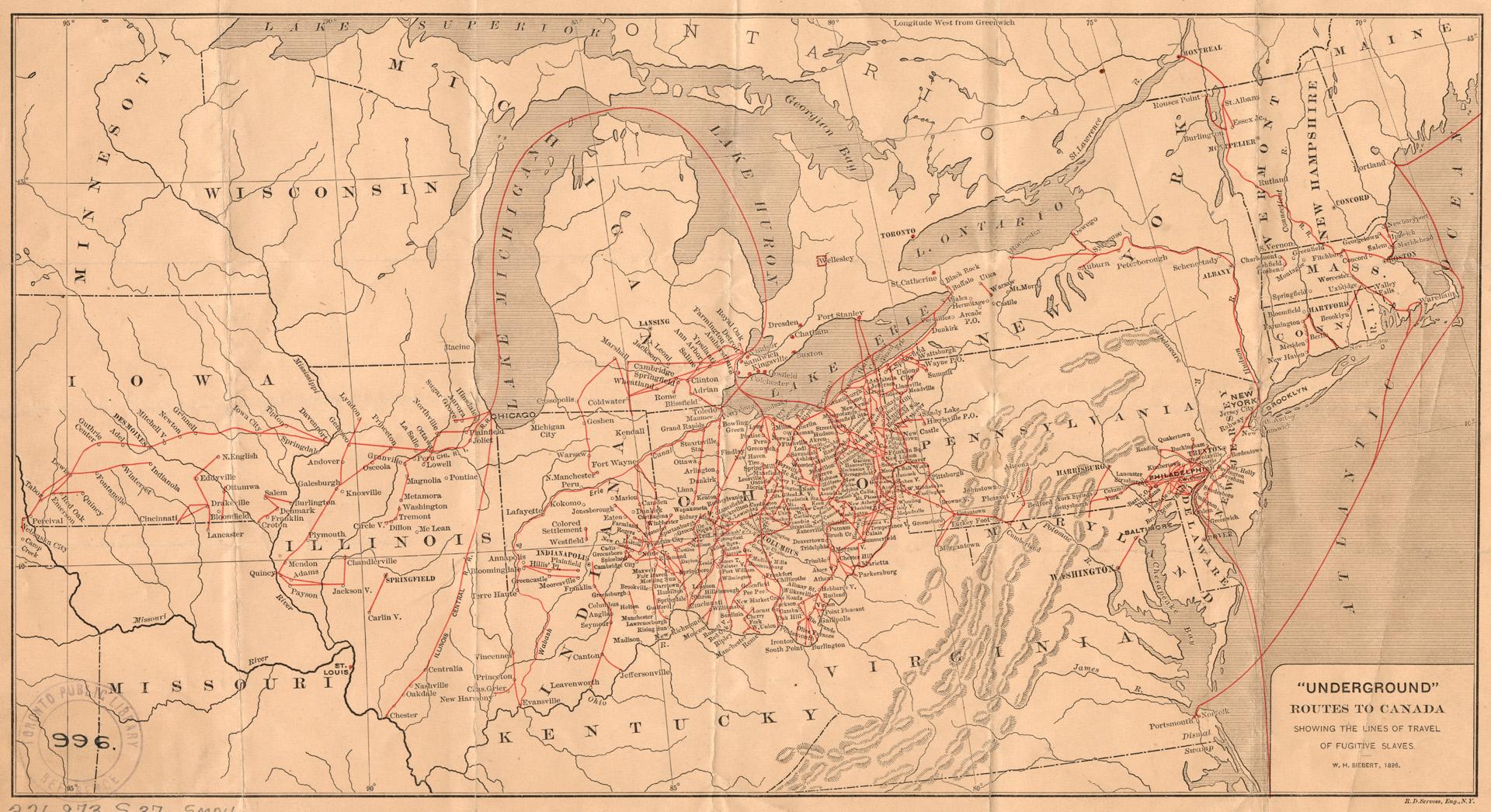
Tracking Ancestors on the Underground Railroad. III: Dreams Rerouted
“In some other parts of Canada the same tendency to spread into the outlying districts and secure small holdings appeared among the colored people. Mr. Peter Wright, the reeve of the town of Colchester, noted this fact, and attributed the clearance of much land for cultivation to fugitive slaves. That such land did not always remain in the possession of this class of pioneers was due to their ignorance of the forms of conveyancing, and doubtless sometimes to the sharp practices of unscrupulous whites.”
Siebert 1898, 205
MECHANICSVILLE, Va. (DML) — The settlers of the Queens Bush, both Black and white, were caught in a catch 22. As squatters, they had no right to the land. They could not obtain rights to the land because it was not yet surveyed and not yet for sale. But they needed to survive and did what they had to do—clear the forest and begin farming what they could.
The problem for them was, by clearing the land and establishing farms, they increased the value of the property once it was surveyed and made available for sale. Many of them foresaw the looming problem, and they petitioned Canadian officials for help—not so much for favor or mercy, but merely for recognition of the value of what we would now call “sweat equity” they had put in, of the value (monetary and otherwise) they had created by their efforts.
“We are aware that an apology for our boldness of squatting into the Queens Bush the way we have done, should be reasonably looked for. We would therefore beg leave to state to you that we are most of us, Emigrants, who came to this country without the means of buying land, either cultivated or wild, — and that we had therefore no means of making a living except as Day Labourers, which is by the way no very easy way of getting a living; but to which we would have still cheerfully submitted, could we have got places to live with our families and constant employment, but we could get neither one nor the other. . . . Taking these things into consideration, we thought it would be best for ourselves and Families, if we would go into the woods and cultivate that soil, which we saw that was at any rate, as long as it was unsettled of no more use than being a rendezvous of the wolf and the Bear, — contemplating at the same time, once to buy the land we have taken in possession, should it be sold upon such conditions that we could buy it and we are sincerely glad that there is a prospect of its being surveyed out.”
From the Queen’s Bush settlers petition to James Durand, MP, 1842; reprinted in Appendix 2 of Brown-Kubisch 2004
The 1842 petition led to no resolution. The settlers followed up with a petition to Charles Metcalfe, Governor General of the Province of Canada, in 1843 in which they pleaded for grants of land; and again to Governor General James Bruce, Lord Elgin, in 1847 requesting favorable payment terms once the land does come up for sale.
“That your pettrs (petitioners) has settled on these lands for many years and under Every difficulty has mad Improvements on the lots of land that your pettrs hav taken up by making roads fencing and Cultivating these land Your pettrs Having no Capital to Comence with makes your pettrs not able to purchase these lands Except that Your pettrs is granted time to pay it by instalments which Your pettrs will do if allowed to pay the same and we earnestly intreat your Excellency favour to grant your pettrs this their Humble request for if your pettrs is driven from our little Homes our distress will be great not knowing what to do. Many of your pettrs hav large families to suport and no means of suporting them if your pettrs Hs to leave these lands that vour pettrs Has settled upon . . .”
From the Queen’s Bush settlers petition to Governor General Lord Elgin, 1847; reprinted in Appendix 2 of Brown-Kubisch 2004
A small group again petitioned Lord Elgin in 1850. The result was the same: nothing. The lands were surveyed, with surveyors having little regard for existing homesteads—even to the point of drawing boundary lines right through dwellings in which families lived. The work many of the Queen’s Bush settlers had put in to create a new home from wilderness amounted to nothing when others stood to benefit from their labors.
“The surveying of the tract called Queen’s Bush, and the subsequent arranging of the terms of payment for land already occupied, caused a number of colored settlers to sell their clearings in ‘the Bush’ and move away. Some of these, it appears, went south to Buxton, but some went north to the shores of Georgian Bay and located at Owen Sound. From this testimony it is certain that by 1850 fugitive slaves had found their way in considerable numbers throughout the inter-lake portion of Canada West.”
Siebert 1898, 218-219
—
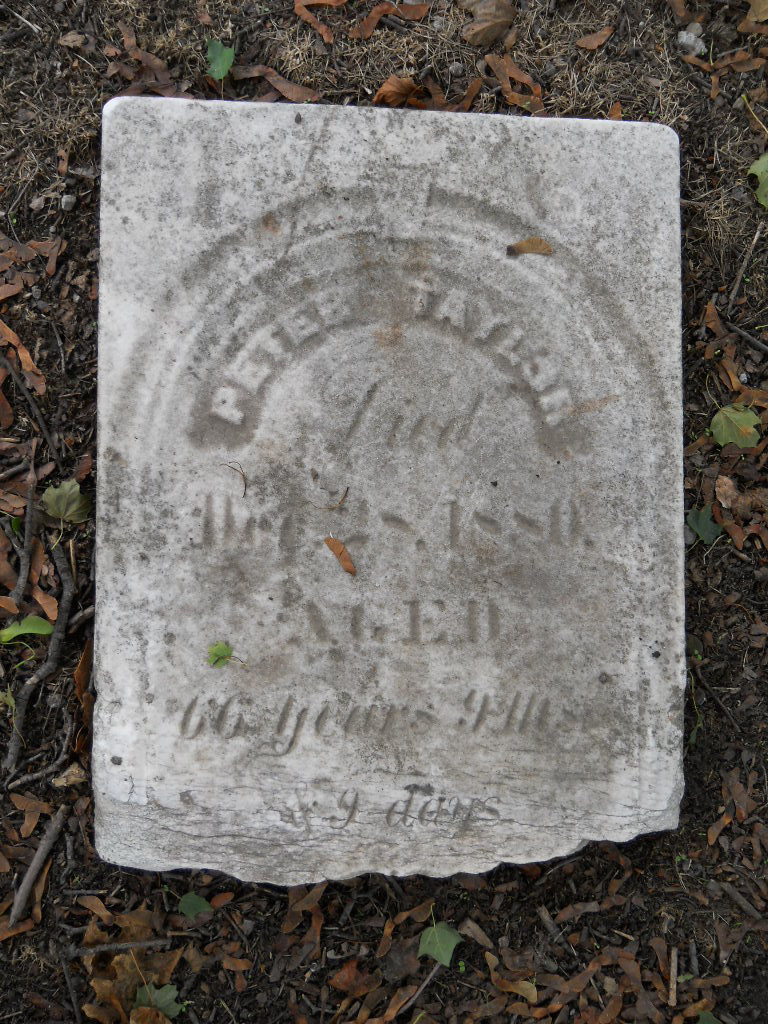
My ancestors were among those who were eventually forced to leave Queen’s Bush. They were still there in 1861, Peter Taylor and Margaret White and their family (including my great-great-great-grandmother, Harriet Ann Taylor) still lived on their farm in the settlement. The Taylor family lived not far from a John Little, who may or may not be the intrepid John Little interviewed by Drew (1856). (There was another escaped slave named John Little in Queen’s Bush.)
Shortly after the time of the 1861 Census of Canada, my great-great-great-grandfather John A. Robinson met and married Harriet Ann Taylor in Canada. Their first child, my great-great-grandfather William A. Robinson, was born in Canada in June 1863. Their young family had relocated to Pittsfield, Michigan, by 1870.
By 1871, Peter Taylor and Margaret White had moved to Amabel Township, Bruce County, Ontario. Amabel is near the Owen Sound area where many former Queen’s Bush residents moved. They weren’t there for long. By 1880, Peter Taylor, Margaret White and the rest of their children had relocated to Michigan where John Robinson and Harriett Ann Taylor had moved a decade earlier.
Peter Taylor and Margaret White have left quite a few descendants that have spread across the United States. But all of them struggled to find a sense of home here. Some of their grandchildren—including some of the children of John and Harriet Ann (Taylor) Robinson—were able to pass as white and did, as I have found in a number of Census records. (My great-grandmother was clearly not the first to be evasive about her past.) Others, like my great-great-grandfather William Robinson, did not have that option. They were too dark-skinned to be other than Black.
References
Brown-Kubisch, Linda. 2004. The Queen’s Bush Settlement: Black Pioneers 1839-1865. Toronto: Natural Heritage Books.
Drew, Benjamin. 1856. The Refugee: Or the Narratives of Fugitive Slaves in Canada. Boston: John P. Jewett.
Siebert, Wilbur H. 1898. The Underground Railroad: From Slavery to Freedom. New York: MacMillan Company.
- Tracking Ancestors on the Underground Railroad. II: Queen’s Bush
- Tracking Ancestors on the Underground Railroad. IV: Relics and Recognition