Introduction
MECHANICSVILLE, Va. (DML) — Welcome to Tangled Roots: A New Identity Forged from Three Continents. Here I plan to present stories about my multiracial family history in North America and beyond along with stories about related immigrant groups as they struggle to make a home of this not-so new world.
This site builds upon my previously created genealogy site The Lawrence-Sinclair genealogy pages, but takes advantage of the ease and flexibility of a blogging platform to create more narrative-based content. The research I reveal here may lead to a longer narrative later—something that others have encouraged me to consider—but I’m nowhere near revealing any spoilers just yet.
Many may find my family’s story an atypical American story, but I suspect far more families have similar tales to tell if only members of our current and former generation will take the time to find and share them.
My wife, Alison Sinclair, has a straightforward lineage—Scottish (paternal) and Slovenian (maternal). My ancestry is much more complicated.
The short version of my ancestral history is that my mother, Kathy Lawrence, myself, and my two children are multiracial: European, Asian (Chinese), and African (with a maternal lineage leading back to the region of the Gulf of Guinea).
The majority of my European ancestry follows a familiar American story: people fleeing poverty and oppression of various kinds, people seeking freedom and opportunity for themselves—though not necessarily others.
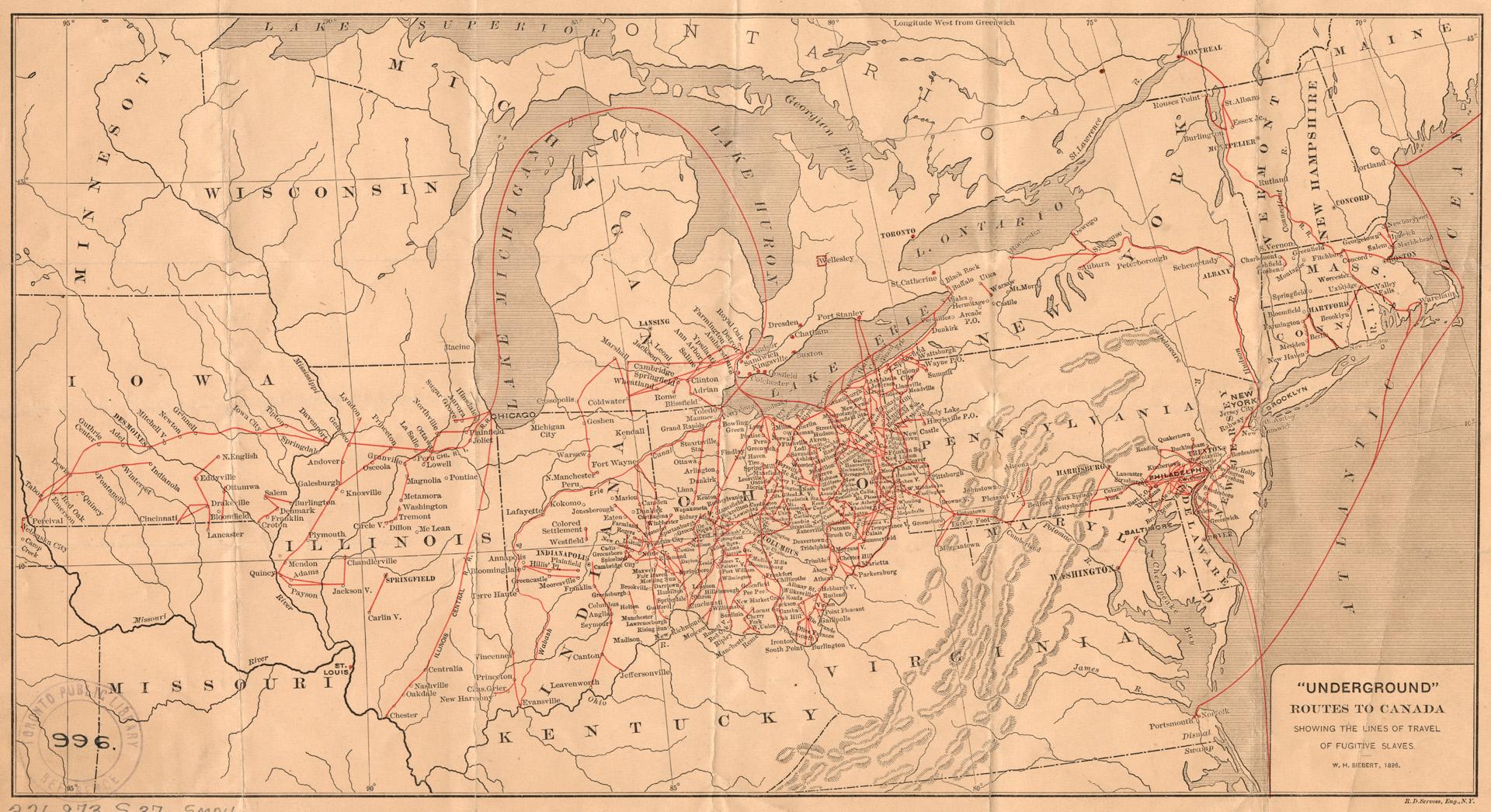
Some of my European ancestors owned slaves. My African ancestors were slaves. Some of those slaves fled to Canada via the Underground Railroad. The header image for this site comes from William Siebert’s 1898 book, The Underground Railroad: From Slavery to Freedom. It shows the primary routes to Canada taken by escaped slaves in search of freedom.
Other of my African ancestors remained in what I suspect was bondage until after the Civil War.
My great-grandmother Myrtle Mae Robinson, the link to both groups of former slaves, spent much of her life denying her African past. While understandable given the racism of the time, it was still a shame, for she seemed to embody the lie that her ancestors were weak and should be ashamed of being held in bondage. There was nothing further from the truth. It took great strength to endure the atrocity of American slavery. And it likewise took great strength to endure the hardships and risks of liberating oneself via the Underground Railroad.
My Chinese ancestors helped build this nation and provided essential services to the United States’s economy, but were treated as second-class citizens, and to endure the humiliation of the Chinese Exclusion Acts and other discriminatory laws, and—at least in my great-grandfather Yee Jock Leong’s case—died as clichés: My great-grandfather was described solely as a Chinese laundryman in his obituaries in Dayton, Ohio, newspapers.
He and others in my family’s past deserve to be remembered as much more than that. So here goes …